
Polignano a mare
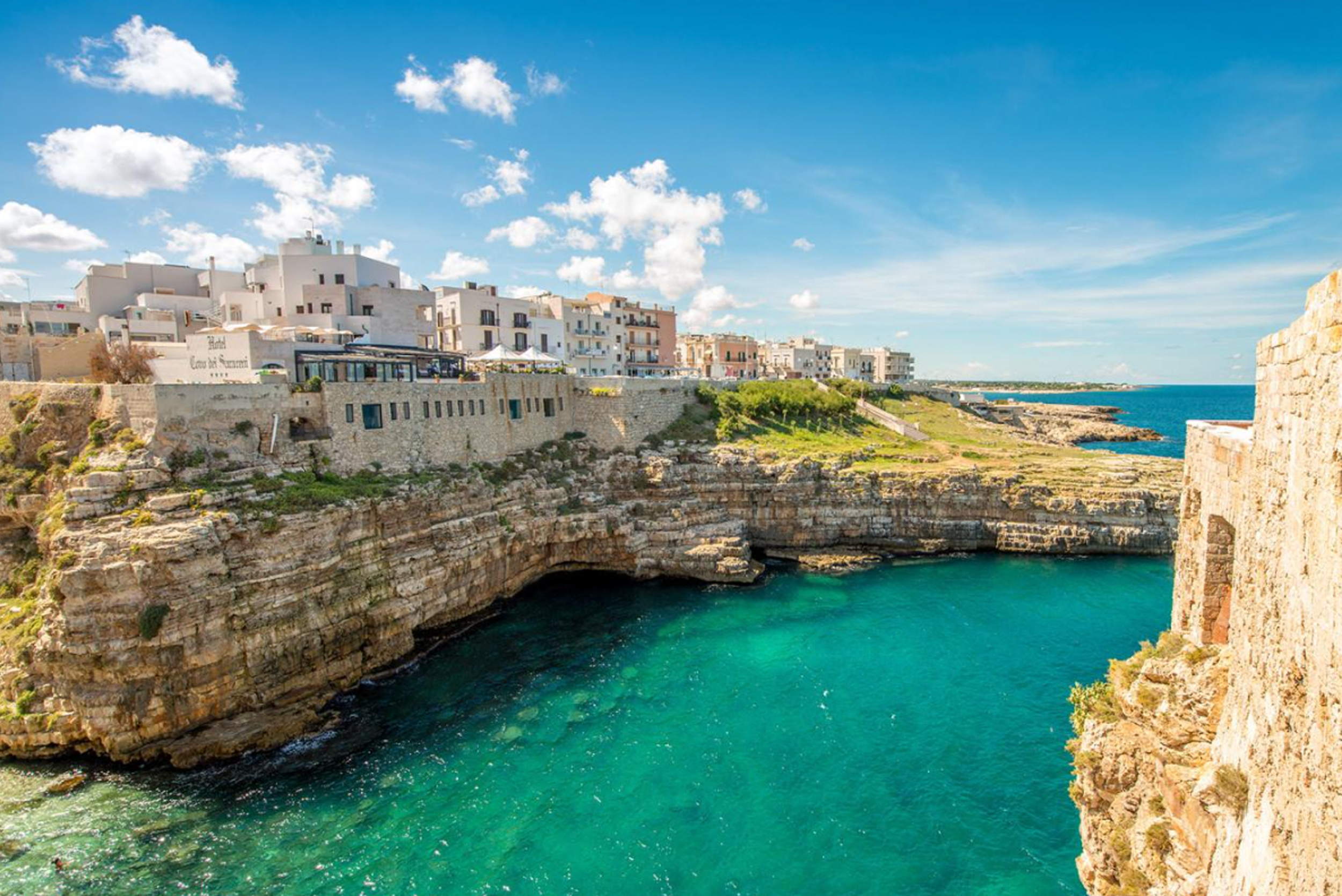
Polignano a Mare: Cliffs, Coves and the Town that Inspired “Volare”
A white old town perched on limestone cliffs, crystal-clear water, Domenico Modugno’s hometown.
Few places in Puglia are as instantly recognisable as Polignano a Mare. Its whitewashed old town sits right on the edge of limestone cliffs, with balconies hanging over the Adriatic and sea caves carved into the rock below. It is also the birthplace of Domenico Modugno, the singer who gave the world “Volare”. And if you are staying at Trullo M, it is only about 22-minute drive away.
Why Polignano a Mare is worth the visit
A town on the edge. The medieval old town stretches along the top of a cliff that drops straight into the crystal-clear sea. Narrow lanes lead to panoramic terraces and balconies with breathtaking views of the coast.
A coast full of caves. Over the centuries the sea has carved numerous caves into the rock, some of them very large. They are best seen from the water on a boat trip.
A place of music and poetry. Polignano is the hometown of Domenico Modugno, and wherever you walk you will feel the spirit of “Volare”. Look out, too, for the lines of poetry written on walls, doors and steps in the old town.
Domenico Modugno: Polignano’s most famous son
Domenico Modugno was born in Polignano a Mare in 1928 and became one of the greatest names in Italian music. His song “Nel blu, dipinto di blu” – known worldwide as “Volare” – was released in 1958, became a global hit and won two Grammy Awards. It remains an ambassador for Italian music around the world, and it is said that Modugno wrote it with the cliffs of his hometown in mind. In 2009 Polignano honoured its son with a bronze statue. Standing about three metres tall on the Lungomare Domenico Modugno, it shows the singer with his arms flung wide open, as if embracing his hometown – exactly the joyful mood of “Volare”.
The seaside: public beaches and lidos
Polignano’s coastline is mostly rocky, with a few pebble coves and the occasional patch of sand. You can choose between a spiaggia libera – a free public beach, where you bring your own towel and umbrella – and a lido or stabilimento balneare, a beach club where you rent sunbeds and umbrellas.
History suggestions: discover the past for yourself
Enter through the Arco Marchesale – also called the Porta Grande, this gateway was the only way into the old town until the 18th century, and it still divides the old town from the new.
Find the Roman road at Lama Monachile – the bridge over Lama Monachile carries the route of the old Via Traiana. As you descend the stairway beside the bridge, look for the remains of the Roman road.
Visit the Chiesa Matrice di Santa Maria Assunta – the town’s main church, on Piazza dell’Orologio (Piazza Vittorio Emanuele II) in the heart of the old town.
Discover the Abbey of San Vito – in the fishing village of San Vito, about 2 km from the centre, an abbey traditionally linked to Basilian monks who fled from the East in the early Middle Ages.
Explore modern art at the Museo Pino Pascali – the only foundation dedicated to contemporary art in Puglia.
Take a boat trip to the sea caves – see the cliffs, the caves and the old town from the water.
Why Trullo M is the perfect base
Polignano within easy reach. At about 28 km – a 22-minute drive – Polignano is close enough for a morning swim, a market visit or a sunset at the Modugno statue, followed by a peaceful night in the countryside.
Polignano a Mare combines dramatic cliffs, crystal-clear water, history and a song the whole world knows – and with Trullo M just 22 minutes away, you can enjoy it all by day and the peace of the countryside by night.